
Same failures, different decade: white paper calls for new tactics to prevent grantmaking mistakes
Posted on 03 Aug 2026
A decade of Australian auditor-general reports shows grantmakers and decision makers repeatedly…
Posted on 13 Jun 2025
By Matthew Schulz, journalist, SmartyGrants
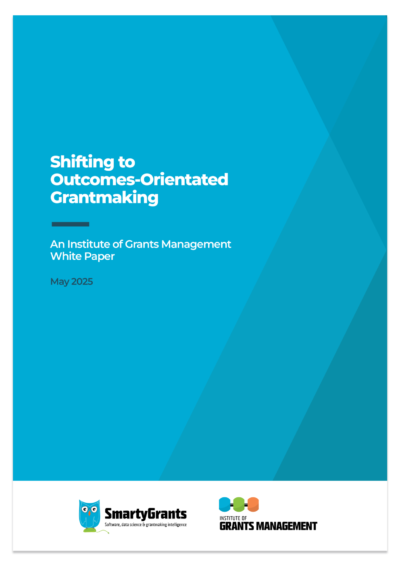
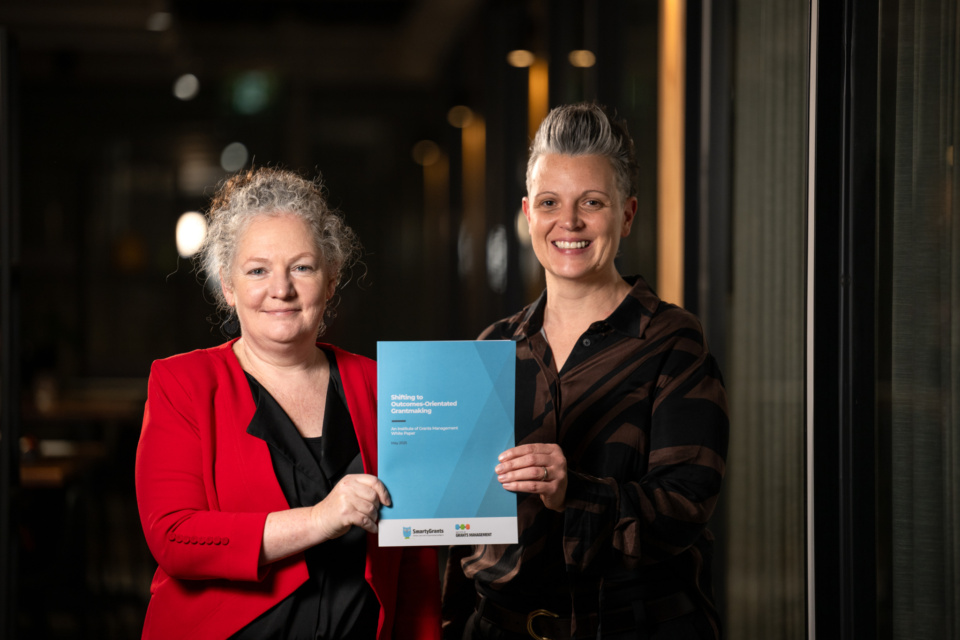
This speech was delivered by the Assistant Minister for Productivity, Competition, Charities & Treasury, Dr Andrew Leigh, to coincide with the launch of the Shifting to Outcomes-Orientated Grantmaking white paper, published by the Institute of Grants Management.
Now, let’s be honest. Grantmaking is not the kind of word that lights up a dinner party.
It’s never going to rival football or crime podcasts in national popularity.
What it lacks in glamour it more than makes up for in significance.
At its best, grantmaking is about much more than money. It’s about belief.
It’s about backing people and communities to solve tough problems with smart, grounded solutions. A well-placed grant is an act of trust, a quiet vote of confidence in a vision for a better world.
But belief alone isn’t enough. At some point we have to ask what happened next. The money went out the door. The program ran. People turned up. What changed?
That’s the central question behind Shifting to Outcomes-Orientated Grantmaking, the report being launched today at the inaugural Grant Impact Forum.
"It is, in short, a call to be stewards of change, not just stewards of money."
Written by Kathy Richardson and Jen Riley and produced by the Institute of Grants Management, it challenges all of us, from government to philanthropy and not-for-profits, to focus not just on what we’re doing, but how it changes people’s lives for the better.
Because here’s the truth. We’ve built increasingly efficient systems for getting grants out the door. We’ve streamlined applications, sped up payments, tracked every dollar. But we’ve been less successful at tracking outcomes. Too often, reporting stops at outputs. We count the number of workshops, we tally the attendees, we add up how much was spent.
But these numbers on their own don’t tell us if someone’s mental health improved, or if a community grew more connected, or if a clever local project sparked lasting change.
This report argues for a better way. Outcomes-orientated grantmaking means weaving outcome goals through every stage of the process. From program design to data management, from contracting to monitoring, the focus shifts from activity to impact.
And it’s not just a different process, it’s a different mindset. It means asking harder questions, being more comfortable with ambiguity, and treating failure as something to learn from, not something to hide in the footnotes.
It is, in short, a call to be stewards of change, not just stewards of money.
The report doesn’t sugarcoat the challenges. It’s honest about the difficulties. Outcomes can be messy. They take time. They’re hard to attribute, but the response is not to give up. The right response is to start small, build trust, and stay curious.
To be clear, this isn’t a war on outputs. Outputs matter, but they’re the means, not the end.
We get this instinctively in our own lives. We don’t measure fitness by how many times we walked into a gym, we measure it by whether we feel stronger, healthier and more energised. That same logic should guide our approach to grants.
I want to congratulate the Institute of Grants Management for a report that is practical, thoughtful and refreshingly honest. It’s part of a broader shift in all communities that are seeking to drive evidence-based outcomes and one I strongly support.
Through the Australian Centre for Evaluation, we are helping government departments test and scale what works, and build a culture of learning around public spending.
And that’s really what this is about: smarter, clearer, better ways to help communities thrive.
Thank you for being part of this conversation and for the work you do every day to make grants not just flow but count.
Posted on 03 Aug 2026
A decade of Australian auditor-general reports shows grantmakers and decision makers repeatedly…
Posted on 25 Jun 2026
Australia distributes an estimated $125 billion in grants annually, but grantmaking, unlike…
Posted on 25 Jun 2026
The federal government's Community Sector Grants Engagement Framework is "on track," the Department…

Posted on 25 Jun 2026
Australia’s grants administration system has centralised bureaucracy instead of expertise, creating…

Posted on 25 Jun 2026
Nine in 10 Australian social impact measurement practitioners are now using AI in their work, but…
Posted on 24 Jun 2026
More than 300 of Australia’s top social impact professionals and leaders will gather in Sydney on…

Posted on 03 Jun 2026
A new report has found that ongoing financial, workforce and governance pressures mean the…
Posted on 20 May 2026
The Australian National Audit Office (ANAO) has released a new report in its Audit Lessons series,…
Posted on 20 May 2026
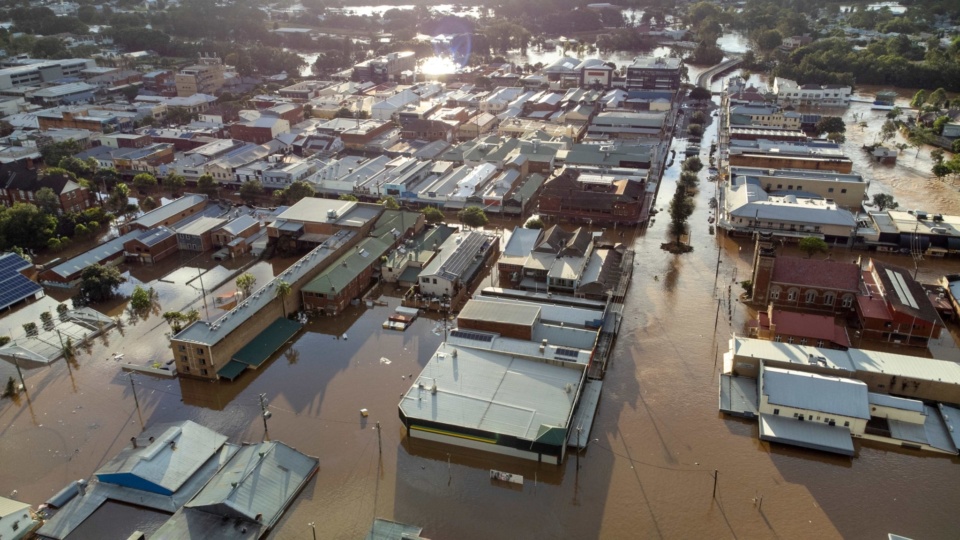
The NSW government's administration of a flood recovery grants program has largely met requirements…
Posted on 07 May 2026
A Tasmanian parliamentary inquiry has heard new evidence that the state's Department of Health has…

Posted on 07 May 2026
A fast-growing region of New Zealand – home to the world’s best adventure tourism, awe-inspiring…
Posted on 07 May 2026
Organisers of Blak Loungeroom, a historic Indigenous-led philanthropy conference held in Melbourne…