
Same failures, different decade: white paper calls for new tactics to prevent grantmaking mistakes
Posted on 03 Aug 2026
A decade of Australian auditor-general reports shows grantmakers and decision makers repeatedly…
Posted on 21 Oct 2025
By Matthew Schulz, journalist, Institute of Grants Management
A new measurement tool designed by First Nations experts is challenging the way grantmakers assess funding impact.
Kowa Collaboration – led by Gamilaroi woman Skye Trudgett – has launched Wathaga, a system of measurement and evaluation grounded in First Nations culture.
Dr Trudgett, who has spent decades researching the use of data for and about Indigenous groups, said the platform was designed to protect Indigenous data sovereignty and increase collaboration between funders and communities.
Trudgett described data sovereignty as “our right as Aboriginal and Torres Strait Islander peoples to be able to collect, govern and interpret our data on our own terms”.
“It is the caring for data, so data can care for country and community [and it involves] maintaining our right … to collect the right information, in the right way, for the right insights, and the right results.”
“But what we know is that communities are already doing evaluation and outcomes measurement in their own way, and they’re collecting a lot of the data that makes sense to them.”
Unlike conventional approaches, Wathaga is not based on predefined outcomes, key performance indicators (KPIs) or metrics that are tracked over time.
“But what we know is that communities are already doing evaluation and outcomes measurement in their own way, and they’re collecting a lot of the data that makes sense to them.”
She said organisations often shared information through song, video or dance, yet these forms of knowledge were routinely overlooked by funders. That oversight reflected broader problems, including:
Trudgett said such methods were “inherently misaligned with data sovereignty”.
She urged funders to instead trust communities when making funding decisions and assessing program success and to “deeply listen to that community and hear the knowledge and wisdom that exists within that community and program around what change is happening”.
Wathaga collects evidence that makes sense to a community, instead of using predefined data points, metrics and outcomes.
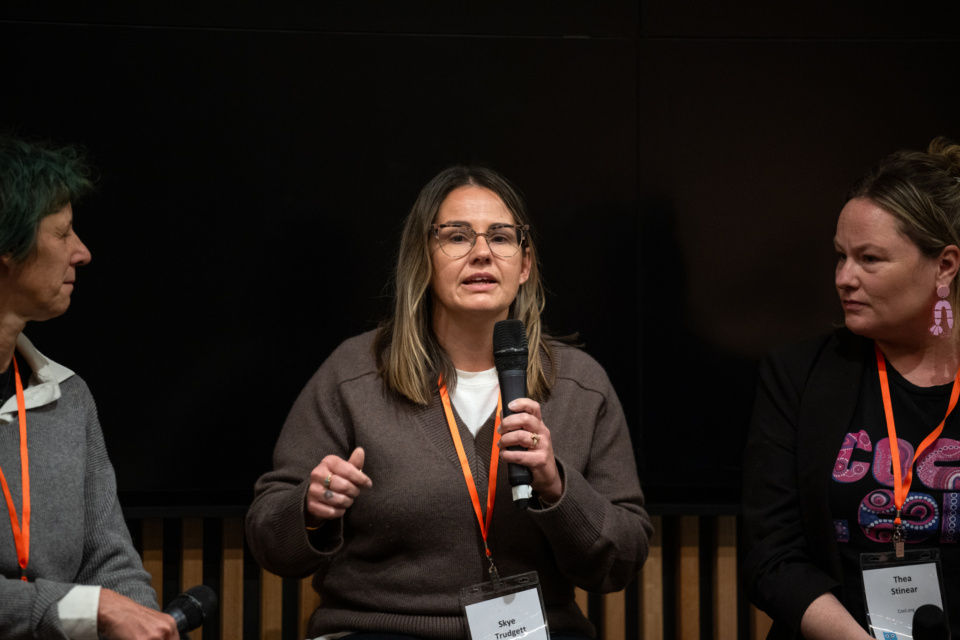
Trudgett was confident the platform could be employed across many communities, describing the methodology as “strength based” and “community driven”, eliminating the need for intermediaries and third-party evaluators.
The methodology adapts the globally recognised measurement, evaluation and learning (MEL) framework, reframing it as understanding, measurement, evaluation and learning (UMEL).
Early testing demonstrated that Wathaga “works really well”.
“It runs at the pace of community. It involves the right people. There’s often less cost involved … [and] it allows us to conceptualise evaluation in a different way.”
Trudgett said the Wathaga platform and its underlying approach highlighted clashes between community priorities and federal government priorities in areas such as productivity.
“Sometimes there are really foreign and Western-imposed expectations of what productivity looks like. For the communities who are right in the thick of what they are doing, sometimes that productivity is long-term productivity, but it doesn’t mean that things are not happening or not progressing.”
“I think there’s a lot of productivity happening in communities. But the challenge is when we try to measure productivity [and yet] the way that community would look at that is completely overlooked. And so we miss that goal and we miss the wonderful things that are happening, because we’re looking over here at the other metrics that someone else has said are important.”
SmartyGrants executive director Kathy Richardson said learning about Trudgett’s work was a “standout moment” at the recent Grant Impact Forum in Melbourne.
Her push for Indigenous data sovereignty “really challenged my thinking”, Richardson said.
Posted on 03 Aug 2026
A decade of Australian auditor-general reports shows grantmakers and decision makers repeatedly…
Posted on 25 Jun 2026
Australia distributes an estimated $125 billion in grants annually, but grantmaking, unlike…
Posted on 25 Jun 2026
The federal government's Community Sector Grants Engagement Framework is "on track," the Department…
Posted on 25 Jun 2026
Australia’s grants administration system has centralised bureaucracy instead of expertise, creating…

Posted on 25 Jun 2026
Nine in 10 Australian social impact measurement practitioners are now using AI in their work, but…
Posted on 24 Jun 2026
More than 300 of Australia’s top social impact professionals and leaders will gather in Sydney on…

Posted on 03 Jun 2026
A new report has found that ongoing financial, workforce and governance pressures mean the…
Posted on 20 May 2026
The Australian National Audit Office (ANAO) has released a new report in its Audit Lessons series,…
Posted on 20 May 2026
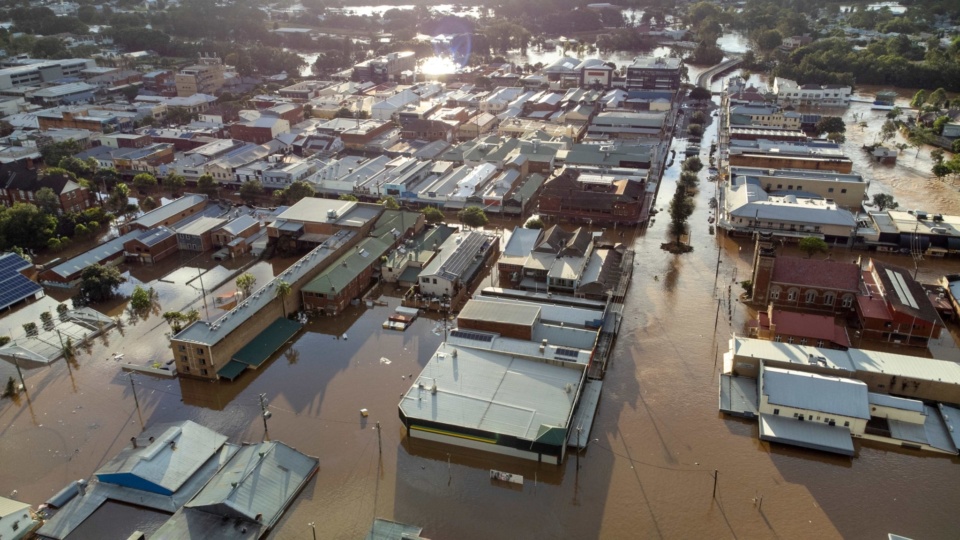
The NSW government's administration of a flood recovery grants program has largely met requirements…
Posted on 07 May 2026
A Tasmanian parliamentary inquiry has heard new evidence that the state's Department of Health has…

Posted on 07 May 2026
A fast-growing region of New Zealand – home to the world’s best adventure tourism, awe-inspiring…
Posted on 07 May 2026
Organisers of Blak Loungeroom, a historic Indigenous-led philanthropy conference held in Melbourne…