
Same failures, different decade: white paper calls for new tactics to prevent grantmaking mistakes
Posted on 03 Aug 2026
A decade of Australian auditor-general reports shows grantmakers and decision makers repeatedly…
Posted on 01 Sep 2025
By Philanthropy Ireland writers

When we talk about impact measurement, it’s easy to think about numbers, charts and annual reports.
But as the recent Making Change Visible: Insights into Effective Impact Measurement webinar revealed, the real power of measurement lies in the stories it tells, the learning it fosters, and the trust it builds between funders and grantees.
Hosted by Philanthropy Ireland, the session was chaired by its head of communications and relationships, Hazel Hennessy, who reminded participants that philanthropy is as much about reflection as it is about giving: “Impact isn’t only about what happens out there in communities, it’s also about how we evolve as funders.”
The heart of the discussion came from a case study presented by SmartyGrants chief impact officer Jen Riley and the Community Broadcasting Foundation’s (CBF’s) Kate Randall. CBF supports more than 400 grantees, including First Nations, multicultural, LGBTQIA+ and youth broadcasters.

“We should be asking ourselves the same hard questions we ask of others.”
Before 2022, CBF’s reporting leaned heavily on outputs: how many grants were awarded, the size of the audiences reached, the number of stations funded. Occasionally, powerful stories would surface about a youth-led broadcast tackling local misinformation or a First Nations radio station amplifying community voices, but there was no consistent way to capture and compare these stories across the portfolio.
The turning point came with a strategic restructure, reducing nine funding programs to three and introducing a shift towards outcomes and impact reporting. This meant asking new questions: What difference are we making? Who is experiencing that change? How do we know?
Implementing the shift was no small feat. As Riley explained, “CBF wanted better insight without making reporting feel like a second full-time job for grantees.” Many recipient organisations were volunteer-run, with varied data literacy. The solution was a flexible approach: allowing grantees to select up to four priority outcomes, align them with CBF’s framework, and keep their own metrics at first.
Workshops on “theory of change” helped identify crucial “middle outcomes”, the tangible shifts between immediate outputs and long-term goals. Advisory committees simplified the language and added well-being outcomes, ensuring the framework reflected the sector’s values. Over 12 months, Randall and her team developed a monitoring, evaluation and learning (MEL) framework that trimmed 200-plus indicators down to fewer than 100 and produced seven core evaluation questions, some focused on unexpected outcomes and broader contributions.
If you already have impact measurement systems in place, the CBF story offers practical ways to go deeper:
Starting from scratch can feel daunting, but the advice from the webinar was clear:
The session closed with a reminder that monitoring and evaluation isn’t just for grantees –it’s equally vital for funders. Hennessy summed up the feeling: “We should be asking ourselves the same hard questions we ask of others.”
It’s important to:
By embedding these approaches, grantmakers can strengthen relationships, enhance transparency, and ensure that every euro invested creates measurable, meaningful change.
A version of this article was first published by Philanthropy Ireland, for a joint presentation with SmartyGrants.
Watch a replay of the Philanthropy Ireland webinar above
Posted on 03 Aug 2026
A decade of Australian auditor-general reports shows grantmakers and decision makers repeatedly…
Posted on 25 Jun 2026
Australia distributes an estimated $125 billion in grants annually, but grantmaking, unlike…
Posted on 25 Jun 2026
The federal government's Community Sector Grants Engagement Framework is "on track," the Department…
Posted on 25 Jun 2026
Australia’s grants administration system has centralised bureaucracy instead of expertise, creating…

Posted on 25 Jun 2026
Nine in 10 Australian social impact measurement practitioners are now using AI in their work, but…
Posted on 24 Jun 2026
More than 300 of Australia’s top social impact professionals and leaders will gather in Sydney on…

Posted on 03 Jun 2026
A new report has found that ongoing financial, workforce and governance pressures mean the…
Posted on 20 May 2026
The Australian National Audit Office (ANAO) has released a new report in its Audit Lessons series,…
Posted on 20 May 2026
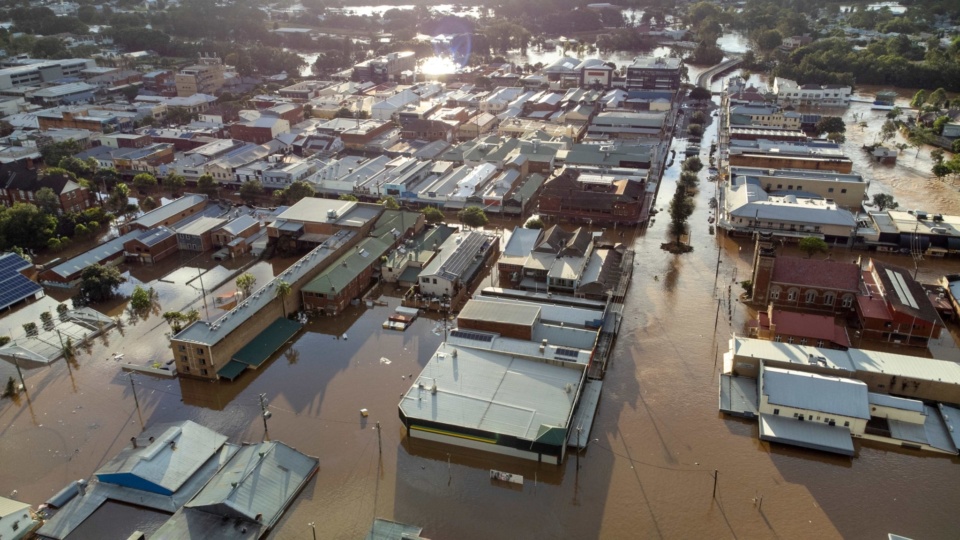
The NSW government's administration of a flood recovery grants program has largely met requirements…
Posted on 07 May 2026
A Tasmanian parliamentary inquiry has heard new evidence that the state's Department of Health has…

Posted on 07 May 2026
A fast-growing region of New Zealand – home to the world’s best adventure tourism, awe-inspiring…
Posted on 07 May 2026
Organisers of Blak Loungeroom, a historic Indigenous-led philanthropy conference held in Melbourne…