
Same failures, different decade: white paper calls for new tactics to prevent grantmaking mistakes
Posted on 03 Aug 2026
A decade of Australian auditor-general reports shows grantmakers and decision makers repeatedly…
Posted on 10 Jun 2025
By Greg Thom, journalist
While an overwhelming 97 per cent of Australia’s top 100 companies report on their social impact, most disclosures are narrow in focus, inconsistent in quality and difficult to compare, according to new research.
The study by the Centre for Social Impact at the University of NSW revealed “significant weakness” in how corporate Australia tracks and reports its social impact.
Researchers said this could lead to companies’ broader impacts on communities, supply chains and human rights going largely unmeasured.
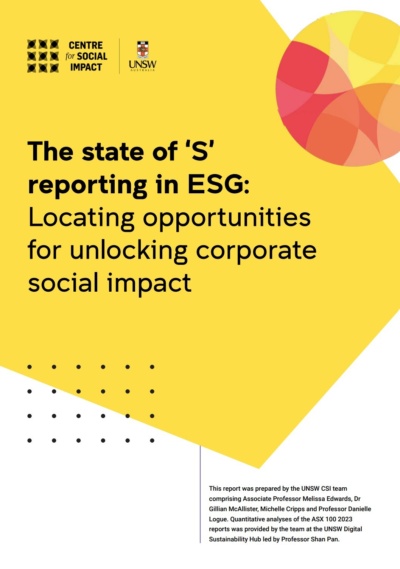
The State of ‘S’ Reporting in ESG: Unlocking Corporate Social Impact Opportunities also confirmed a concerning decline in ASX100 firms disclosing social risks between 2023 and 2024.
ESG stands for Environmental, Social and Governance measures and is a framework used to assess an organisation's sustainability and ethical impact.
The criteria have become increasingly important in recent years as a way for investors and other stakeholders to evaluate how well a company manages its impact on the environment, its relationships with society, and its corporate governance practices.
Associate Professor Melissa Edwards, who led the research, said corporate social impact isn’t just about internal culture or charitable donations.
“It’s about how a company operates in society – its value chain, its customers, its communities. Without standardised metrics, we’re just counting inputs, not measuring outcomes.”
The Centre for Social Impact report revealed:
“By going beyond basic box-ticking, boards will be able to make data-driven decisions that foster long-term community benefits, build deeper stakeholder trust, and enhance their reputation as leaders in social impact.”
The report found that topics under-reported by top companies included non-compliance with social laws, (reported by 13.98 per cent of ASX100 companies in company reports), human rights clauses in contracts (22.58 per cent) and product and service safety impacts (16.13 per cent).
Edwards said the successful implementation of climate impact disclosure and reporting frameworks provided a blueprint for advancing social impact reporting.
“In the past, environmental sustainability has received more attention, and this is largely because measuring social outcomes can be more challenging than environmental,” she said.
The research identified three factors preventing effective social sustainability reporting:
Edwards said that by addressing the complexities in the "Social" element of ESG reporting, companies could be better placed to understand the extent of their social impact.

“By going beyond basic box-ticking, boards will be able to make data-driven decisions that foster long-term community benefits, build deeper stakeholder trust, and enhance their reputation as leaders in social impact,” she said.
Edwards said mandated climate impact reporting had transformed environmental disclosures, helping to prevent greenwashing through stronger assurance standards, and it was time to apply the same level of rigour to social impact.
“The frameworks are there; we just need to build the systems to support them.
“This shift not only benefits society but also unlocks new business opportunities and mitigates future risks, positioning companies for sustainable growth in an increasingly sustainability-conscious market.”
Professor Danielle Logue, director of the Centre for Social Impact, said companies that scale back their social commitments risk more than reputational damage.
“They risk losing the trust of their employees, customers, and communities. Walking back from these commitments signals risk, not strength.”
Posted on 03 Aug 2026
A decade of Australian auditor-general reports shows grantmakers and decision makers repeatedly…

Posted on 25 Jun 2026
Australia distributes an estimated $125 billion in grants annually, but grantmaking, unlike…
Posted on 25 Jun 2026
The federal government's Community Sector Grants Engagement Framework is "on track," the Department…
Posted on 25 Jun 2026
Australia’s grants administration system has centralised bureaucracy instead of expertise, creating…

Posted on 25 Jun 2026
Nine in 10 Australian social impact measurement practitioners are now using AI in their work, but…

Posted on 24 Jun 2026
More than 300 of Australia’s top social impact professionals and leaders will gather in Sydney on…

Posted on 03 Jun 2026
A new report has found that ongoing financial, workforce and governance pressures mean the…
Posted on 20 May 2026
The Australian National Audit Office (ANAO) has released a new report in its Audit Lessons series,…
Posted on 20 May 2026
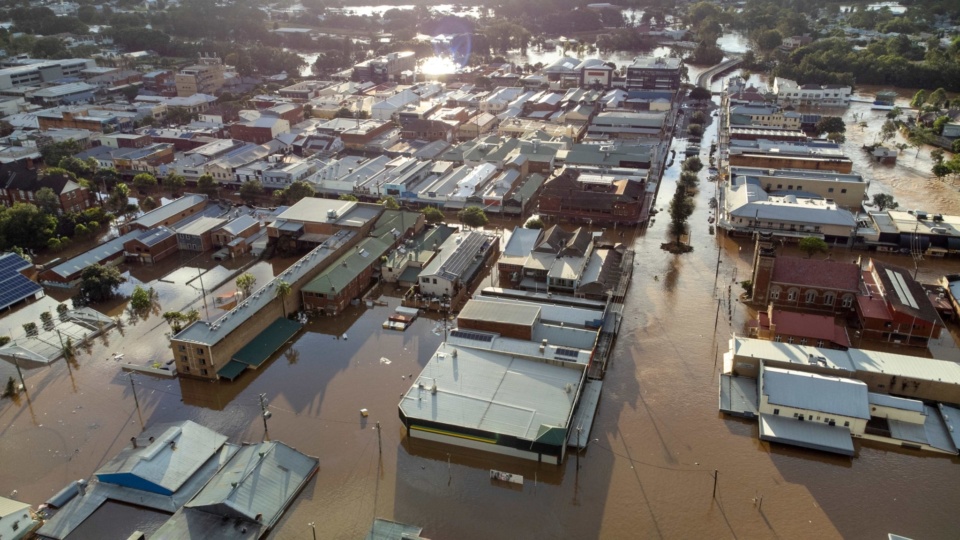
The NSW government's administration of a flood recovery grants program has largely met requirements…
Posted on 07 May 2026
A Tasmanian parliamentary inquiry has heard new evidence that the state's Department of Health has…

Posted on 07 May 2026
A fast-growing region of New Zealand – home to the world’s best adventure tourism, awe-inspiring…

Posted on 07 May 2026
Organisers of Blak Loungeroom, a historic Indigenous-led philanthropy conference held in Melbourne…